A leading global biopharmaceutical company
Conversational AI
Contact-center service interactions with human-in-the-loop support.
Conversational AI
I lead designers inside high-stakes enterprise products—turning tangled operating models, AI outputs, and business workflows into systems people can understand, trust, and ship.
Not a list of engagements — the work that proves I can structure ambiguity, lead design inside AI/data organizations, and turn model output into decisions.
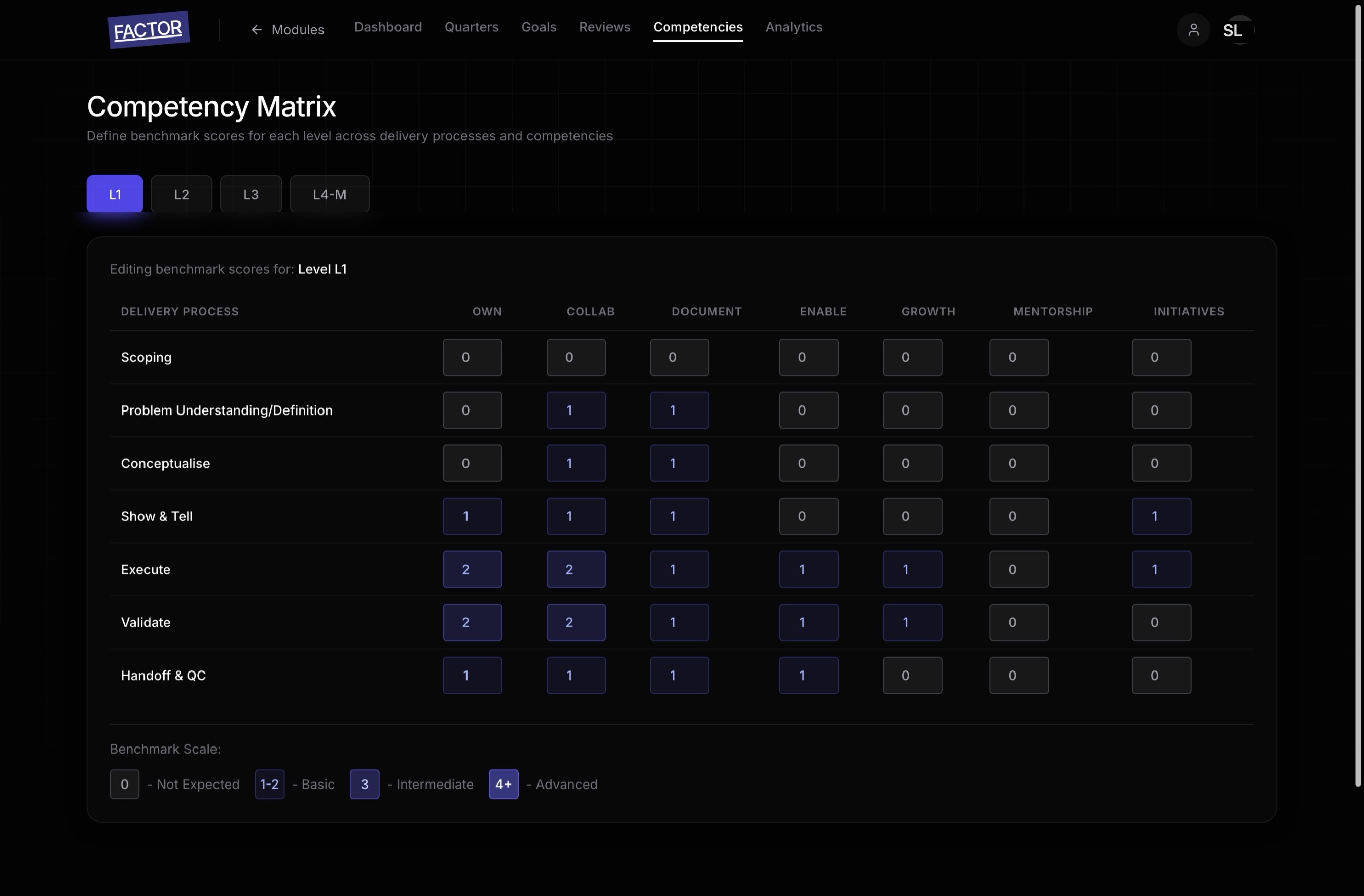
A design maturity and performance platform used by 38 designers and five managers. Factor translated a 7×7 competency model into quarterly reviews, documented growth plans, staffing decisions, and promotion-readiness conversations — reaching 100% review completion and reducing review-preparation time by 50%.
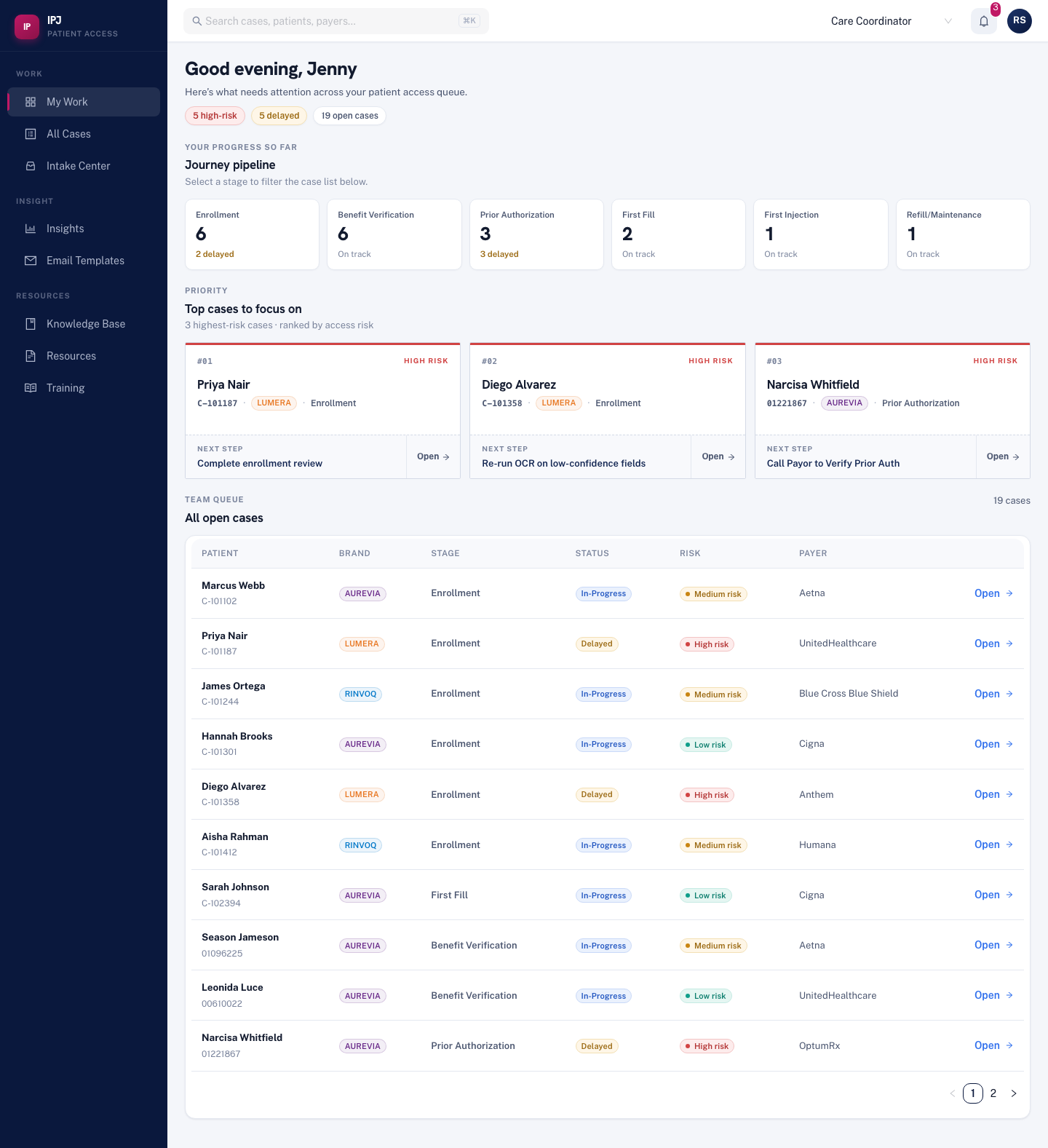
Connecting patient-services complexity, workflows, and agentic AI into a more usable operating model. The real question wasn’t “where does AI go?” — it was where humans need control and how the system earns trust.
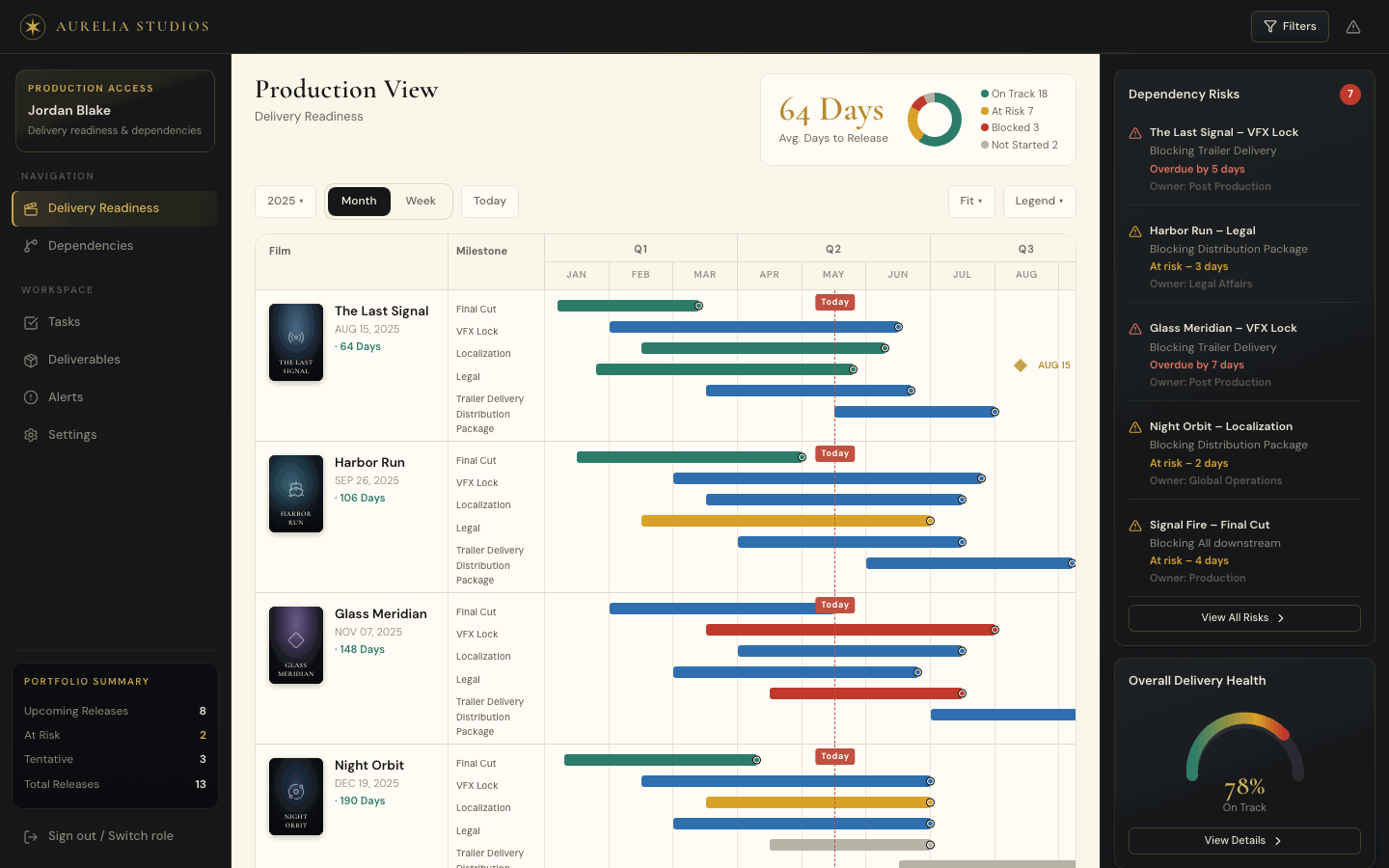
A studio release-planning system delivered under a 30-day constraint. Strongest proof of scope control, executive stakeholder alignment, and enterprise information architecture. I also built the studio-management design system — adopted by Amazon after the merger.
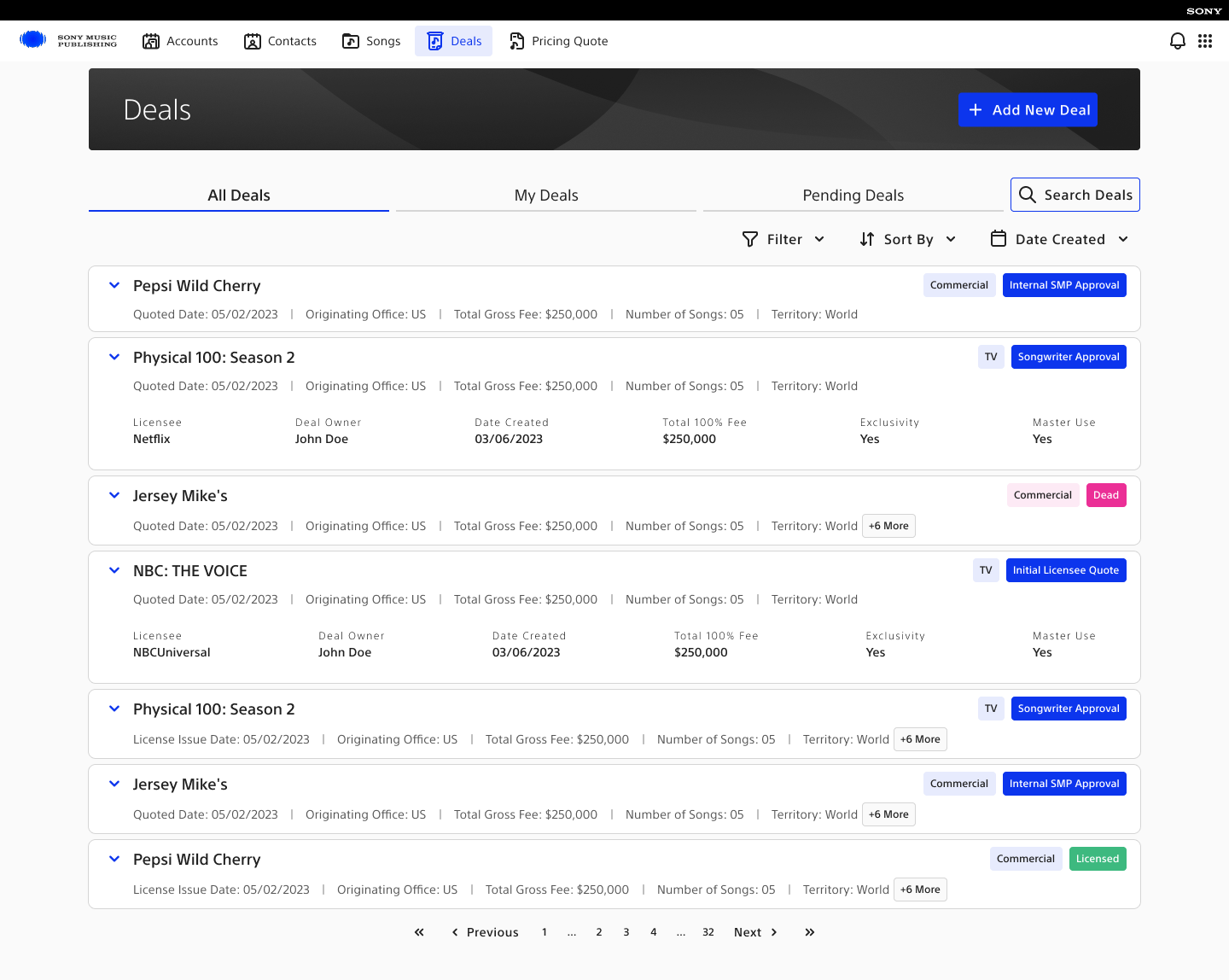
An OOUX-led CRM that made songs, rights, deals, approvals, and ownership visible in one global licensing workflow — replacing repeated entry and fragmented coordination.
The breadth behind the featured cases — from pharma and CPG to banking and reinsurance. Across branches, studios, and core insurance operations, the recurring problem is the same: one object model, many roles, with permissions as the design surface.
Contact-center service interactions with human-in-the-loop support.
Making operating workflows visible before product decisions.
Turning model output into budget, channel, and planning decisions.
Collapsing a monolithic .NET core — claims, policy, audits, billing, and accounting — into one role-based portal. The object model was the only thing that could unify it.
One surface for seven frontline roles — frontline staff, relationship managers, CSRs, branch and deputy branch managers, sales executives, and loan officers — working the same records concurrently across 1,200 branches. Same branch, different jobs; the permissions were the product.
Built ground up: the back-office system behind a bank-wide points economy — earned across card spend, banking products, and bill payments; redeemed against flights, shopping, and bill settlement. Many touchpoints, one model.
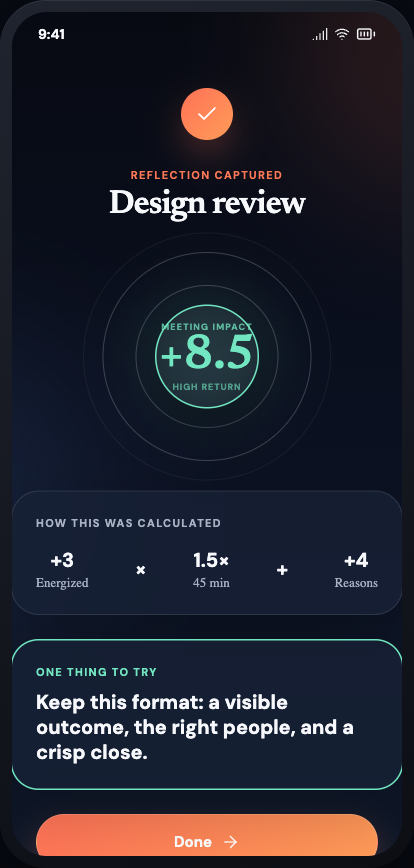
Not slideware — products I scoped, designed, and built end to end, then put in front of real users. Meeting Pulse is the one I've taken furthest; Insightfully and Growth Radar sit alongside it.
I defined the scoring model, designed and built the Expo app, added local persistence and tests, and shipped it through TestFlight onto the App Store.
The product decision: no account, server, or opaque AI score. Reflections stay on-device; every score explains itself.
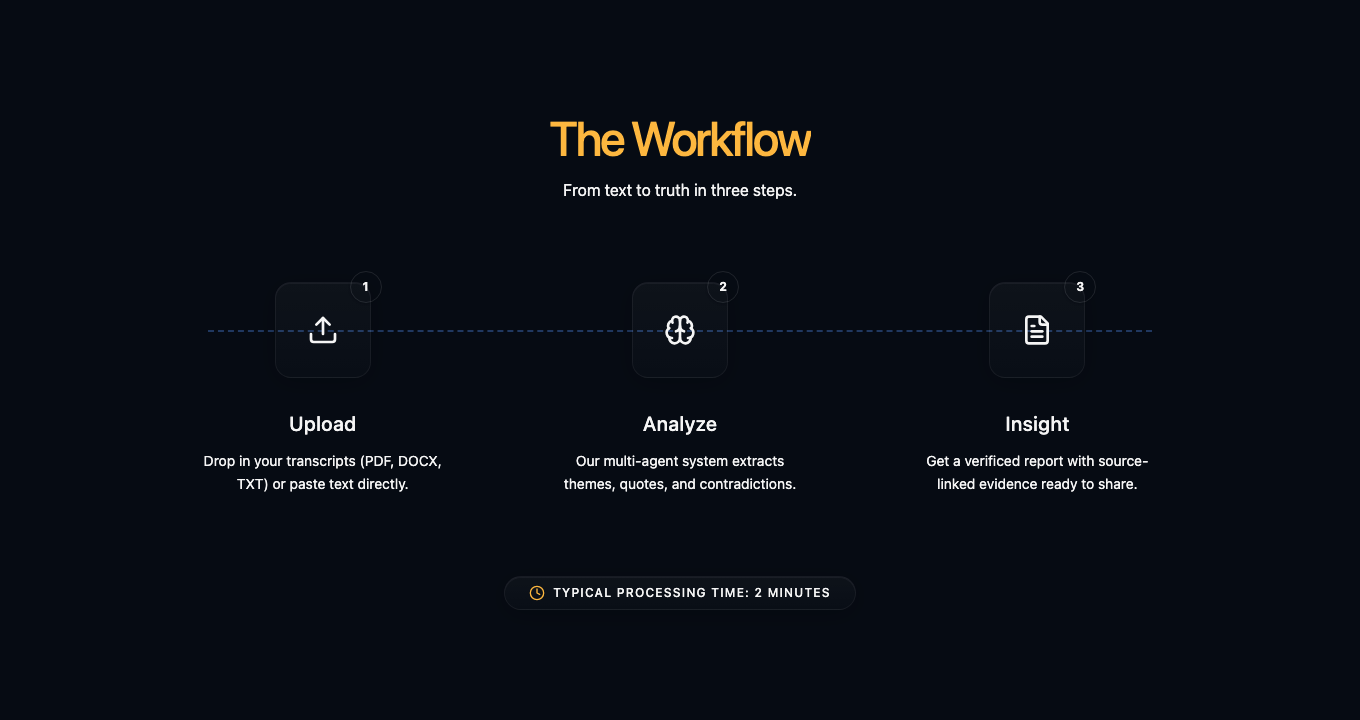
Eight sequential agents analyse 20 research formats—from discovery interviews and exploratory research to contextual inquiry and market research—then verify every insight against its source.
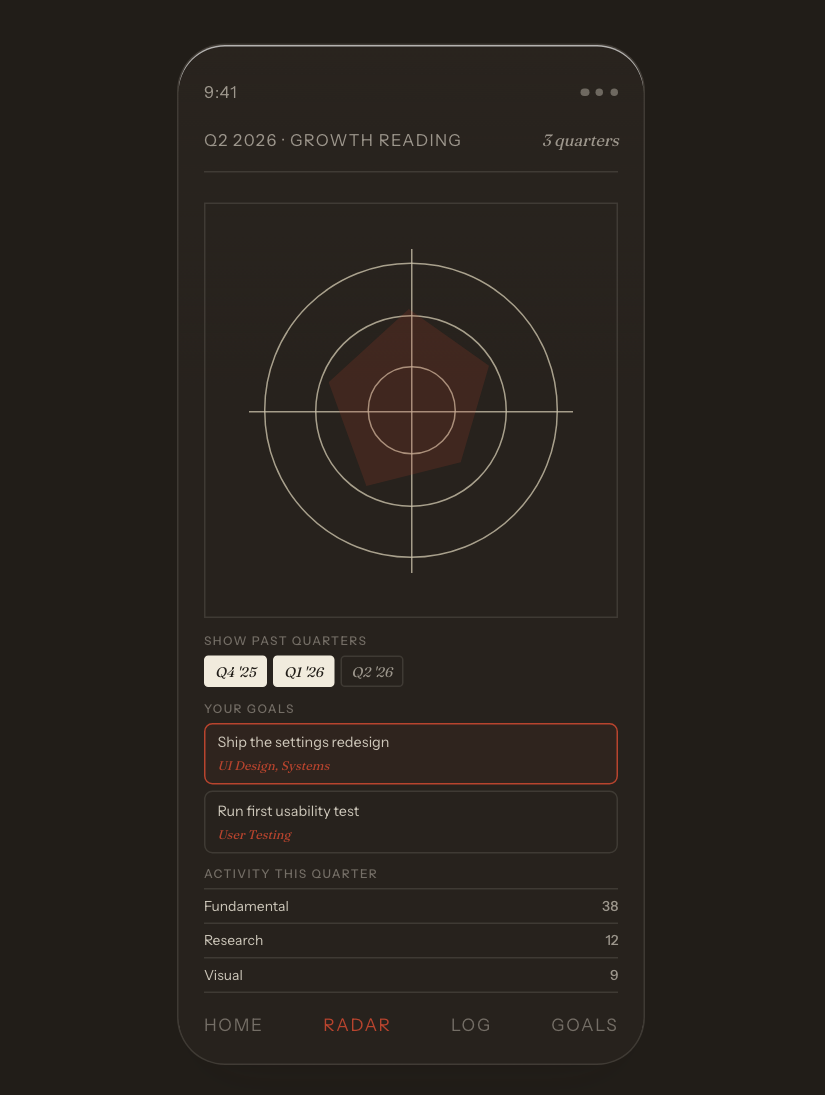
Inspired by Fogg's Tiny Habits, Ebbinghaus's spaced practice, Schön's reflection-on-action, and Kolb's experiential learning cycle. Tiny notes become weekly intent and a quarterly radar across 57 skills.
The more intelligent a system becomes, the more its object model matters. Agents need to know what they act on. Dashboards need to know what decisions they support. Workflows need states, permissions, and ownership.
OOUX gives design, data science, engineering, workflow owners, and business stakeholders a shared language before the interface hardens. I work down the stack in order — never starting at the screen.
I apply the same structural discipline to design systems: shared components, states, and decision rules that can hold across products, platforms, and organizational change.
What exists — entities, states, relationships, ownership. The nouns everything else agrees on.
How work moves — steps, handoffs, exceptions, and the permissions that gate them.
What gets decided, on what evidence, and by whom the recommendation is acted on.
Where people stay in control of the machine — review, override, and explanation.
A framework for impact mapping, business-value framing, and solution prioritisation — built at MathCo to decide what a team should work on before deciding what to design.
I joined OOUX Chief Evangelist Sophia V. Prater to talk about earning stakeholder buy-in by starting with the project pain teams already feel, building shared object-first fundamentals, and showing how much useful OOUX work can happen in a focused 45-minute session.
 On airSophia V. Prater × Raktim Chatterjee
Not taste at scale — the artifacts and rituals that decide how problems are framed, how quality is defined, how designers grow, and how decisions survive.
Four hires, three promotions supported, and a $25M design portfolio across enterprise AI and data work.
Design leadership across a $10M enterprise portfolio. Across both roles, the work included staffing, capability building, performance calibration, and quality across concurrent delivery.
A regular rhythm where teams learn what “good” means — improving the work and sharpening judgment, not performing authority.
A shared bar for what we’re selecting for, so hiring decisions are calibrated rather than personal.
The 7×7 competency system behind Factor — making growth legible for designers and managers alike.
Structured checkpoints that keep quality and direction aligned across parallel consulting engagements.
Close enough to the work to shape quality — with the goal of making the team less dependent on me each quarter.
The artifact is often the memo, the model, the map, and the rationale — decisions that survive the meeting.
Verbatim from LinkedIn recommendations — a direct report, a client, and a client-side partner on what the work is like from their side of the table.
Raktim is an outstanding leader who inspires his team to achieve excellence… He has a knack for identifying and nurturing talent, and he creates an environment that fosters creativity, innovation, and teamwork.
He has led multiple Initiatives in the areas of TV and Film and has been a true business partner for me… He delivers on time, and on features regardless of complexity.
In addition to his exceptional design skills, Raktim is also an excellent leader who has played a key role in the success of our design team. He has a collaborative and supportive leadership style.
My position on AI is structural. It doesn’t remove the need for design judgment — it raises the cost of vague workflows, weak object models, unclear permissions, unexplained recommendations, and hand-wavy automation.
The designer’s job is to decide what the system knows, what it can do, what it should explain, where humans stay in control, and how the output becomes usable inside real work.
In regulated systems, “expensive” has a specific meaning: every recommendation must be auditable, every decision contestable, and every automation legally survivable. I’ve designed under three of those regimes — patient data in pharma, a reinsurer created by statute, and banking in two markets.
I’m Raktim Chatterjee, a Design Manager in Bengaluru. At MathCo I lead nine designers across three to five parallel enterprise AI and data engagements, while helping build the design practice inside a data-and-AI consultancy. My scope includes hiring, performance and growth planning, design quality, client leadership, and a $25M design portfolio.
Before MathCo I led enterprise UX across Sony Music Publishing, MGM, and Disney. The through-line is OOUX: making systems visible before making screens.
I’m open to senior design-leadership roles, advisory work, and conversations with teams shaping enterprise AI and data products. I’m at my best where the product is complex, the operating model is still forming, and design needs to lead both.
Bengaluru, IN
Design Manager, MathCo